
E-Bike vs Car: The True Cost Comparison in 2026
The average American spends $10,728 per year on car ownership, according to AAA. An electric bike like the REOCRO RE0-14 costs $198 — once. Even with accessories, maintenance, and electricity, the total annual cost of e-bike commuting is under $300.
That's not a typo. Let's run the numbers.
The Upfront Cost
| Expense | Car (Used, 3 years old) | E-Bike (REOCRO RE0-14) |
|---|---|---|
| Purchase price | $22,000 | $198 |
| Sales tax (6%) | $1,320 | $12 |
| Registration & title | $250 | $0 |
| Total upfront | $23,570 | $210 |
The car costs 112 times more to acquire. But the real difference shows up in the ongoing costs.
Annual Operating Costs
Fuel vs. Electricity
Car (gasoline):
- Average commute: 16 miles each way, 32 miles round trip
- Fuel economy: 26 MPG (average for used sedan)
- Daily fuel: 1.23 gallons × $3.50/gal = $4.31
- Annual (250 commuting days): $1,078
E-Bike (electricity):
- Same commute, electric assist used for 50% of ride
- Battery: 48V 10Ah = 480Wh = 0.48 kWh per full charge
- Charges needed per week: 3-4 (partial charges for partial rides)
- Average electricity rate: $0.15/kWh
- Weekly electricity cost: 3.5 charges × 0.48 kWh × $0.15 = $0.25
- Annual: $13
Fuel savings: $1,065 per year.
Insurance
| Coverage | Annual Cost |
|---|---|
| Full coverage auto insurance (national average) | $1,682 |
| E-bike insurance (optional — most homeowner's/renter's policies cover theft up to a limit) | $0-$100 |
| Difference | $1,582+ |
E-bikes generally don't require separate insurance. A $198 e-bike like the RE0-14 is below most insurance deductibles anyway. If it's stolen from your home, renter's or homeowner's insurance covers it. If stolen elsewhere, you're out $198 — less than most auto insurance deductibles.
Maintenance & Repairs
| Item | Car (Annual) | E-Bike (Annual) |
|---|---|---|
| Oil changes | $120 | $0 |
| Tires | $150 (one set, prorated) | $30 (one set, prorated) |
| Brakes | $200 | $15 (brake pads) |
| Chain/belt | $0 | $15 (chain lube + replacement every 2 years) |
| Battery | $0 | $50 (prorated: $200 replacement every 4 years) |
| Miscellaneous repairs | $500 | $30 |
| Total | $970 | $140 |
Car maintenance averages $970/year (AAA figure). An e-bike costs roughly $140/year — mostly tires, brake pads, chain lube, and a prorated battery replacement.
Parking
| Parking Scenario | Car (Annual) | E-Bike (Annual) |
|---|---|---|
| Downtown monthly parking | $1,800-$3,600 | $0 (folded bike under desk) |
| Suburban office parking | Often free | $0 |
| City street parking (metered, daily) | $1,250 ($5/day) | $0 |
| Parking tickets (average) | $150 | $0 (rarely ticketed) |
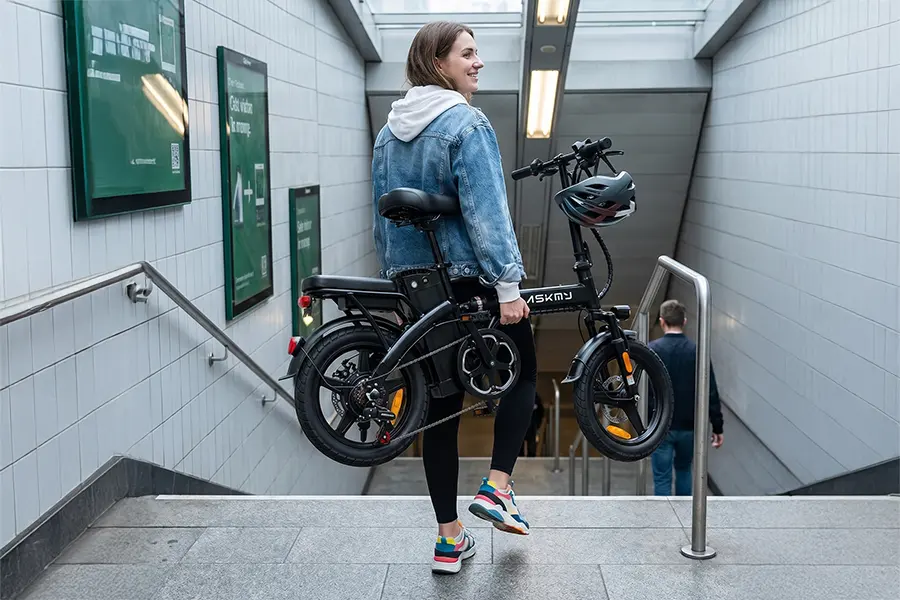
If you pay for parking — and most urban commuters do — the e-bike saves $1,000-$3,600 per year in parking alone. The RE0-14 folds to 28" × 20" × 14" and fits under a standard office desk.
The Full Annual Breakdown
| Cost Category | Car (Annual) | E-Bike (Annual) | Savings |
|---|---|---|---|
| Loan payment (5-year, 6%) | $5,112 | $0 | $5,112 |
| Fuel/electricity | $1,078 | $13 | $1,065 |
| Insurance | $1,682 | $0 | $1,682 |
| Maintenance | $970 | $140 | $830 |
| Parking | $1,800 | $0 | $1,800 |
| Depreciation | $2,300 | $0 (negligible at $198) | $2,300 |
| Total | $12,942 | $153 | $12,789 |
The average commuter saves roughly $12,800 per year by switching from a car to an e-bike. Over five years, that's $64,000.
This isn't theoretical. If you live within 15 miles of work and your route is bikeable, switching to an e-bike today is one of the highest-ROI financial decisions you can make.
The ROCO RE0-14 Payback Analysis
At $198, the REOCRO RE0-14 pays for itself in:
- One month if you currently spend $200/month on gas
- Two months if you currently spend $100/month on public transit
- One week if it replaces one month of downtown parking
- Three days if it prevents one parking ticket and one tank of gas
There is no faster payback period in personal transportation. The bike is effectively free after 1-2 months of use.
See the full review: REOCRO RE0-14 Complete Review
When a Car Still Makes Sense
E-bikes aren't a complete car replacement for everyone. You still need a car (or car-sharing service) if:
- Your commute exceeds 15-20 miles each way (though e-bike + train is a viable option)
- You regularly transport passengers (kids, carpool)
- You need to carry large cargo (groceries for a family, furniture, equipment)
- You live in an area with extreme weather and no safe bike infrastructure
- Your commute involves highways without bike lanes
For many two-car households, the optimal setup is one car + one e-bike. The e-bike handles individual commutes and short trips. The car handles family transport, bad weather days, and long-distance travel.
The Environmental Math (Bonus)
If the financial argument isn't enough:
- Car commute (16 miles each way, 26 MPG, 250 days/year): 6.15 tons CO₂ per year
- E-bike commute (same distance, U.S. grid electricity): 0.03 tons CO₂ per year
The e-bike produces 99.5% less carbon emissions for the same commute. Over a 5-year period, switching to an e-bike prevents roughly 30 tons of CO₂ — equivalent to planting 450 trees.
The Hidden Costs of Car Dependency
Beyond the line items, car ownership creates costs that don't show up in budget spreadsheets:
- Time wasted in traffic: The average U.S. commuter spends 54 hours per year in traffic congestion. E-bikes often use bike lanes and paths that bypass jams entirely.
- Health costs: Sedentary car commuting is linked to higher rates of obesity, cardiovascular disease, and stress. E-bike commuting provides moderate daily exercise (even with pedal assist, you're moving more than sitting in a car).
- Parking stress: Finding parking in urban areas takes an average of 17 minutes per trip. An e-bike eliminates this entirely — fold it, bring it inside, done.
Real-Life Scenario: Sarah's Commute
Sarah lives 8 miles from her office in Seattle. She was spending:
- $180/month on gas
- $220/month on downtown parking
- $120/month on insurance (her share of the family policy)
- $50/month on maintenance (prorated)
Total: $570/month = $6,840/year on car commuting costs.
She bought a REOCRO RE0-14 for $198. Her new costs:
- $1/month on electricity
- $0 on insurance (renter's policy covers theft)
- $12/month on maintenance (tires, chain lube, brake pads, prorated)
New total: $13/month = $156/year
Annual savings: $6,684. In one year, her e-bike saved enough to pay for a family vacation — and she arrives at work energized instead of stressed from traffic.
Frequently Asked Questions
Is an e-bike really cheaper than a car?
Yes — dramatically. The average car costs $10,000-$13,000 per year to own and operate (AAA). A budget e-bike like the REOCRO RE0-14 costs $198 to buy and approximately $150 per year to operate. The annual savings exceed $10,000 for most commuters.
How much does it cost to charge an e-bike?
About $0.07 per full charge at average U.S. electricity rates ($0.15/kWh). For a daily commuter charging 3-4 times per week, that's roughly $13 per year in electricity — less than two gallons of gasoline.
Can an e-bike completely replace a car?
For single-person commutes under 15 miles, yes — an e-bike can replace a car for most trips. For families, long distances, or areas without bike infrastructure, a "one car + one e-bike" model works better than full replacement.
How long does an e-bike battery last?
A well-maintained UL-certified battery lasts 3-5 years (500-800 charge cycles). A replacement battery for the RE0-14 costs roughly $200, or about $50/year when prorated. Learn how to maximize battery lifespan.
Won't I arrive at work sweaty?
With pedal assist, you control the effort level. Use higher assist on hot days and you'll arrive comfortable. Many e-bike commuters keep a change of clothes at work, but with assist mode on medium or high, you can commute in work clothes without breaking a sweat.
Ready to run your own numbers? The REOCRO RE0-14 at $198 makes the math impossible to ignore. Compare it to other top folding e-bikes or see what you get for under $200.
Last updated: July 2026. All cost figures based on AAA 2025 Your Driving Costs report, U.S. Energy Information Administration average electricity rates, and national auto insurance averages. Individual costs will vary by location, commute distance, and driving habits.
Related Reading
Related Articles
Affordable E-Biking
Ready to Ride?
Experience the freedom of electric biking without breaking the bank. REOCRO foldable e-bikes offer UL-certified safety, reliable performance, and unbeatable value.
Shop REOCRO on Amazon30-day money-back guarantee. Free returns.